
What a Trademark Filing Does
Short answer
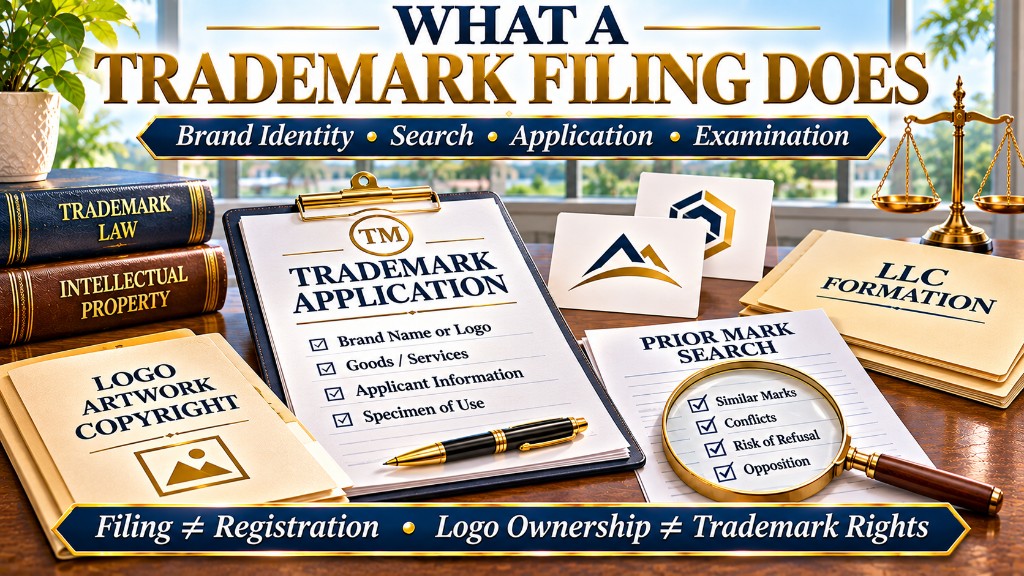
A trademark filing, often a federal application, seeks registration of a mark used in commerce to identify goods or services. Forming an LLC or a corporation does not create trademark rights. A search before filing matters because a similar mark already in use can block or challenge the application. Registration is not automatic approval. An examiner can refuse the mark, and a third party can oppose it. An NDA keeps defined secrets. It does not register a mark. Ownership of a logo design, through work made for hire or an assignment, is separate from trademark rights in the name or the design as a brand. The office, the classes of goods, and the review calendar depend on where you file.
General information only. Laws and deadlines depend on the state and the facts. This is not legal advice. See the disclaimer.
Key points
- A trademark filing seeks registration of a mark used in commerce to identify goods or services.
- Forming a company does not create trademark rights. A search before filing still matters.
- Registration is not automatic approval. An NDA does not register a mark.
- Owning a logo file is separate from trademark rights in the mark as a brand.
What does a trademark filing actually do?
It asks a trademark office to register a word, design, or other mark that identifies the source of goods or services. Use in commerce is the usual foundation. The application names the mark, the goods or services, and the basis for filing. A registration, if it issues, is a different paper from the application. A serial number is not a certificate.
The intellectual property protection guide is the longer page on trademarks, copyright, and trade secrets. This article is the filing people confuse with a state entity name. Does forming a company protect the name? is why an LLC filing is not that clearance.
- The exact mark you use with customers
- The goods or services the mark identifies
- Where and when you first used the mark in commerce
- A note of the search you ran before filing
Does forming a company create trademark rights?
No. A state entity filing creates the company and may stop a later company from using the identical name on that state's entity list. It does not reserve the name against other businesses in the market, and it does not create a trademark. Trademark rights come from use in commerce and, often, from a registration after a filing and review.
The business formation guide is how the company is created. Formation and the trademark are two projects. Do not treat the state's approval of an LLC name as a clearance to brand a product.
Is registration automatic after I file?
No. An examiner reviews the application. A mark that is merely descriptive, or that conflicts with a prior mark for related goods, can be refused. A third party can oppose registration. A search before filing does not guarantee approval, but filing without one is how people print packaging on a hope. The trademark office's review is not the same calendar as a state entity filing.
What an NDA does is a secrecy contract. It does not put a mark on the register. What to check before signing a contract is the paper to read before you hire the brand designer or lock in a packaging run that assumes the filing will sail through.
Is owning the logo the same as owning the trademark?
No. Copyright in a design file is about who owns the artwork. Trademark rights are about whether that word or design functions as a brand for goods or services. A company can own the logo file and still face a conflict with someone else's mark. A designer can own the file until an assignment moves it, and that assignment still does not register the mark.
What work made for hire means is why paying an invoice does not transfer copyright. Put the assignment in the contract before the work starts. The contract drafting and review guide is where the assignment and the secrecy clause live. Do not order a large print run while ownership of the file and clearance of the mark are still open questions.
Who can explain a trademark filing before someone files?
The Best Lawyer Around publishes these guides and can request an introduction to an independent attorney. It is not a law firm, and reading this article does not create an attorney-client relationship. The attorney you speak with decides whether to take the matter and what the fee is.
Bring the mark, the goods or services list, the first-use dates you have, and any designer agreement. Do not wait on a website reply to order packaging. The disclaimer and the questions about this site state the limits of these pages. Locations is the reminder that a state filing and a federal trademark are different offices.
Questions people ask
What does a trademark filing do?
It seeks registration of a mark used in commerce to identify goods or services. A serial number is the application. A registration, if it issues, is a different paper.
Does forming an LLC create trademark rights?
No. A state entity filing creates the company. It does not create trademark rights. Use in commerce, and often a filing and review, does that work.
Is trademark registration automatic after filing?
No. An examiner can refuse the mark, and a third party can oppose it. A search before filing matters, but it does not guarantee approval.
Does an NDA register my mark?
No. An NDA keeps defined secrets. It does not create trademark rights or put a mark on the register.
Is owning a logo the same as a trademark?
No. Copyright in a design file and trademark rights in a brand are different. Owning the artwork does not clear the mark against other users.
Does this page file my trademark?
No. The Best Lawyer Around is not a law firm. Reading this article does not create an attorney-client relationship or a trademark filing.