
What an Arraignment Is
Short answer
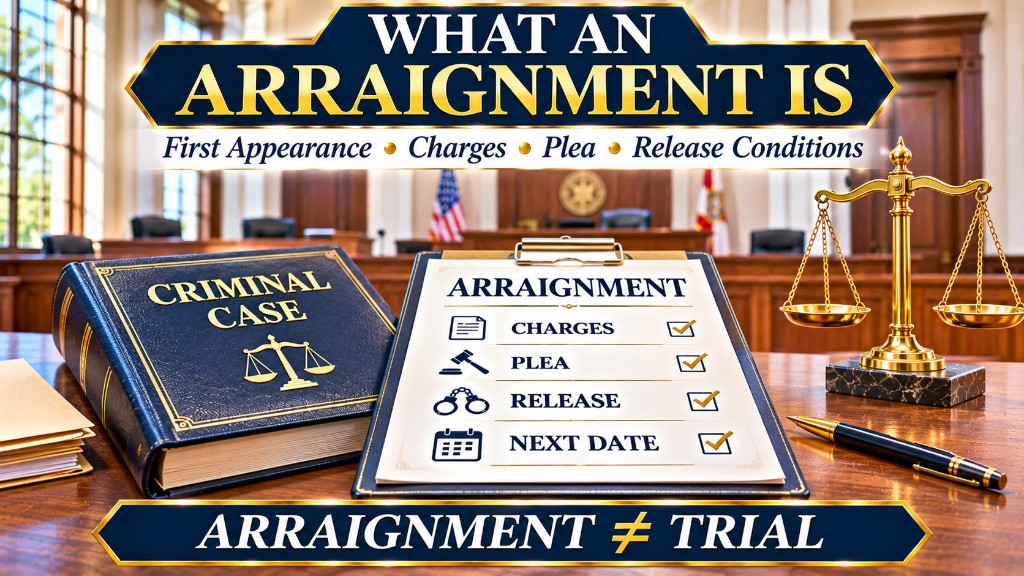
An arraignment is usually the first formal court appearance in a criminal case. The court reads or confirms the charge, and the person enters a plea of not guilty, guilty, or no contest. It is often not the day to plead guilty without reviewing the charging papers and the stop or incident records. Bail or release conditions may be set or reviewed. It is not a trial, and it is not diversion by itself. The exact name and the sequence of events depend on the state and the local court.
General information only. Laws and deadlines depend on the state and the facts. This is not legal advice. See the disclaimer.
Key points
- An arraignment is usually the first formal appearance: the charge is confirmed and a plea is entered.
- It is often not the day to plead guilty before the charging papers and the evidence are reviewed.
- Bail or release conditions may be set or reviewed. Missing the date can lead to a warrant.
- It is not a trial and not diversion by itself. Those are separate steps or programs.
What happens at an arraignment?
The court confirms the charge on the complaint or information, addresses counsel if that question is open, and takes a plea. Not guilty keeps the case moving toward later dates. Guilty or no contest can end the case that day or move it toward sentencing. The judge may also set or review release conditions.
The felony charges guide and the misdemeanor offenses guide explain why the level on the paper matters before anyone trades a plea for speed. What to expect at a first court date is the broader morning checklist. This article is the formal plea appearance itself.
- The charging paper and the case number
- Any bond or release order already issued
- Whether counsel has been requested or appointed
- The next date the court sets after the plea
Should I plead guilty at the arraignment?
Usually not before the file is reviewed. A guilty or no-contest plea can be a conviction. Defenses that live in the stop, the search, the identification, or the lab work are hard to reopen after that plea. Asking for time, or entering not guilty, is how many people keep those questions open.
What a plea agreement does is the later written deal on counts, rights waived, and terms a judge can still reject. What diversion means is a separate written program that can end in dismissal if conditions are completed. An arraignment is not that program by itself.
Can bail or release conditions change at arraignment?
Often yes. The court may set bail, change it, or release the person on conditions such as no contact, travel limits, or testing. Read the paper before leaving the building. A hallway summary is a weak record of what the order actually says.
What bail or a bond does is why release is not a finding on the charge. What to do after an arrest is the same-day list for booking papers and the next date. Keep both stacks together.
Is the arraignment the trial?
No. The trial, if the case gets that far, is later. The arraignment does not require the prosecutor to play every video or produce every lab report that morning. DUI cases can also have a separate license clock that is not the same as the criminal appearance. The DUI/DWI defense guide separates those dates.
If you miss the arraignment, call the clerk the same day. What to do if you miss a court date is that call. Waiting to be stopped is how a failure-to-appear becomes its own problem.
Who can review the charge before the plea is entered?
The Best Lawyer Around publishes these guides and can request an introduction to an independent attorney. It is not a law firm, and reading this article does not create an attorney-client relationship. The attorney you speak with decides whether to take the matter and what the fee is.
If the arraignment is today, go. Bring the citation, the bond papers, and any release order. Do not wait on a website reply. The disclaimer and the questions about this site state the limits of these pages. Locations is the reminder that the useful question is which court the case is filed in.
Questions people ask
What is an arraignment?
Usually the first formal court appearance where the charge is read or confirmed and a plea of not guilty, guilty, or no contest is entered. Bail or release conditions may also be set or reviewed.
Is the arraignment the trial?
No. It is an early appearance. Trials, if the case gets that far, are set later. The prosecutor does not have to show every piece of evidence that morning.
Should I plead guilty at the arraignment to get it over with?
A guilty or no-contest plea can be a conviction before the charging papers and the evidence are reviewed. Many people enter not guilty or ask for time so those records can be read first.
Is arraignment the same as diversion?
No. Diversion is a separate written program that can end in dismissal if conditions are completed. An arraignment is the plea appearance. It does not create diversion by itself.
What happens if I miss the arraignment?
The court can issue a warrant, and some states add a failure-to-appear charge. Call the clerk the same day and go in with the papers instead of waiting to be stopped.
Does this page appear in court for me?
No. The Best Lawyer Around is not a law firm. Reading this article does not create an attorney-client relationship, and this site does not appear in court for you.