
What Negligent Security Means
Short answer
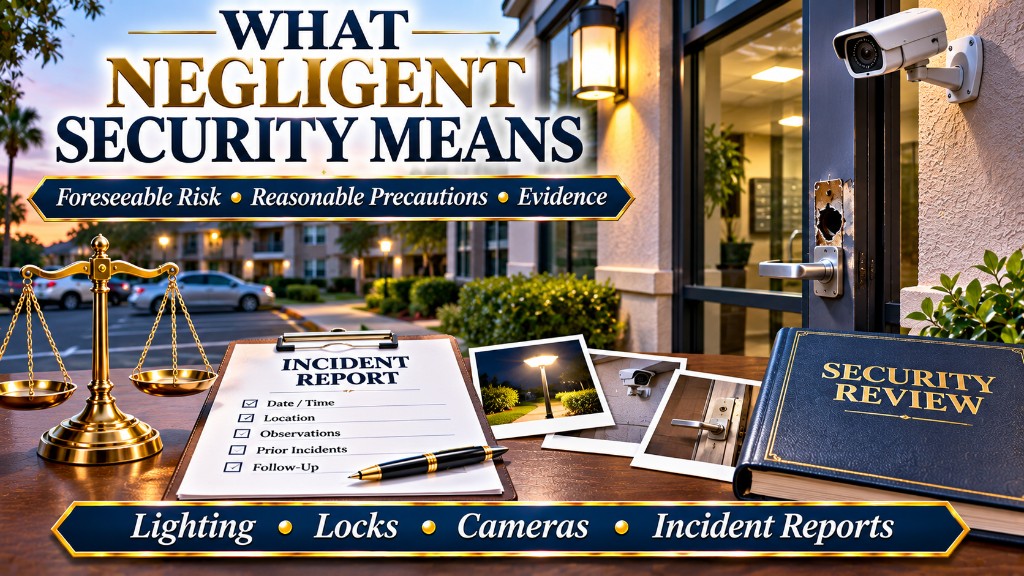
Negligent security is a premises claim that a property owner or operator failed to take reasonable steps to protect lawful visitors from foreseeable crime. Lighting, locks, cameras, staffing, and prior incidents on or near the property are the kinds of facts that often matter. It is not automatic liability after every assault on the property. Why the person was there can matter. Invitee, licensee, and trespasser labels vary by state. Preserve photos of the lighting and the entry points, the incident report, and medical records. Comparative fault may still reduce or, in some states above a threshold, block recovery. The duty and the filing clock depend on the state where the property sits.
General information only. Laws and deadlines depend on the state and the facts. This is not legal advice. See the disclaimer.
Key points
- Negligent security alleges that an owner failed to take reasonable steps against foreseeable crime.
- A crime on the property does not automatically make the owner responsible.
- Why the person was there can matter. Labels for visitor status vary by state.
- Preserve photos, incident reports, and medical records. Comparative fault may still apply.
What does negligent security actually mean?
It is an allegation that the owner or operator of property failed to take reasonable steps to protect people lawfully on the property from a crime that was foreseeable. The claim sits inside premises liability. The fought issues are usually notice or foreseeability, what steps a reasonable operator would have taken, and whether those steps would have mattered. A dark lot, a broken lock, missing cameras, or thin staffing can be part of that story. They are not, by themselves, a finished verdict.
The premises liability guide is the longer page on notice, visitor status, and government deadlines. What to do if you are hurt on someone else's property is the same-day checklist for photos and the report. This article is the crime-related security piece of that file.
- Photos of the lighting, locks, cameras, and entry points
- The incident report, or the name of the person you told
- Any prior-incident history you already know about
- Why you were there: a receipt, a ticket, or a lease
- Medical records from the first visit
Does a crime on the property automatically make the owner responsible?
No. The claim usually requires foreseeability and a failure to take reasonable steps, not only that a crime occurred on the property. Prior incidents, the neighborhood pattern the operator knew or should have known, and the security measures that were or were not in place are how that gets argued. Do not treat every assault in a parking lot as the same case.
What comparative fault means is why your own share of blame can still reduce recovery even when a property claim is in play. Insurers argue percentages early. Photos and medical notes matter. Do not guess a national fault percentage from a website.
Does it matter why I was on the property?
Often yes. A customer invited to shop, a tenant, a guest, and a trespasser are not owed the same duty in many states. The labels vary. Keep the receipt, the event ticket, or the lease that shows why you were there. Do not describe yourself as a customer if you were not.
A wet floor on the same visit is a different premises theory. What to do after a slip and fall is that page. The slip and fall guide is the longer wet-floor practice page. Match the paper to what happened.
What should I preserve after a negligent-security injury?
Photograph the lighting, the locks, the cameras, and the wider entry area before anything is repaired or turned on. Keep the incident report number and the names of witnesses. Keep medical records from the first visit. Do not post a detailed account of the crime online. Write a private timeline while the details are fresh.
If someone died, what to do after a wrongful death is the separate first-days page for that claim. The wrongful death guide is the longer practice page. A dog bite on the same property is a different animal claim; do not force it into a security theory unless the facts truly fit.
Who can explain a negligent-security claim from the photos and the report?
The Best Lawyer Around publishes these guides and can request an introduction to an independent attorney. It is not a law firm, and reading this article does not create an attorney-client relationship. The attorney you speak with decides whether to take the matter and what the fee is.
Bring the photos, the report, the medical records, and anything that shows why you were there. If the property is a city or county building, ask about a written notice deadline immediately. The disclaimer and the questions about this site state the limits of these pages. Locations is the reminder that the duty and the clock follow the state where you were hurt.
Questions people ask
What is negligent security?
A premises claim that a property owner or operator failed to take reasonable steps to protect lawful visitors from foreseeable crime, such as lighting, locks, cameras, or staffing.
Does a crime on the property automatically decide the claim?
No. Foreseeability and reasonable steps are the usual issues. A crime on the property does not, by itself, make the owner responsible.
Does it matter why I was on the property?
Often yes. Visitor status can change the duty owed. Labels vary by state. Keep a receipt, ticket, or lease that shows why you were there.
What should I keep after the incident?
Photos of the lighting and entry points, the incident report, witness names, and medical records from the first visit. Do not post a detailed account online.
Can comparative fault still reduce a negligent-security claim?
Yes. Insurers may argue that the injured person shares blame. Some states reduce recovery by that share, and some bar recovery above a local threshold. There is no single national percentage.
Does this page file a claim?
No. The Best Lawyer Around is not a law firm. Reading this article does not create an attorney-client relationship or send a notice for you.